Why Do Dogs Have Tails? The Science Behind the Wag
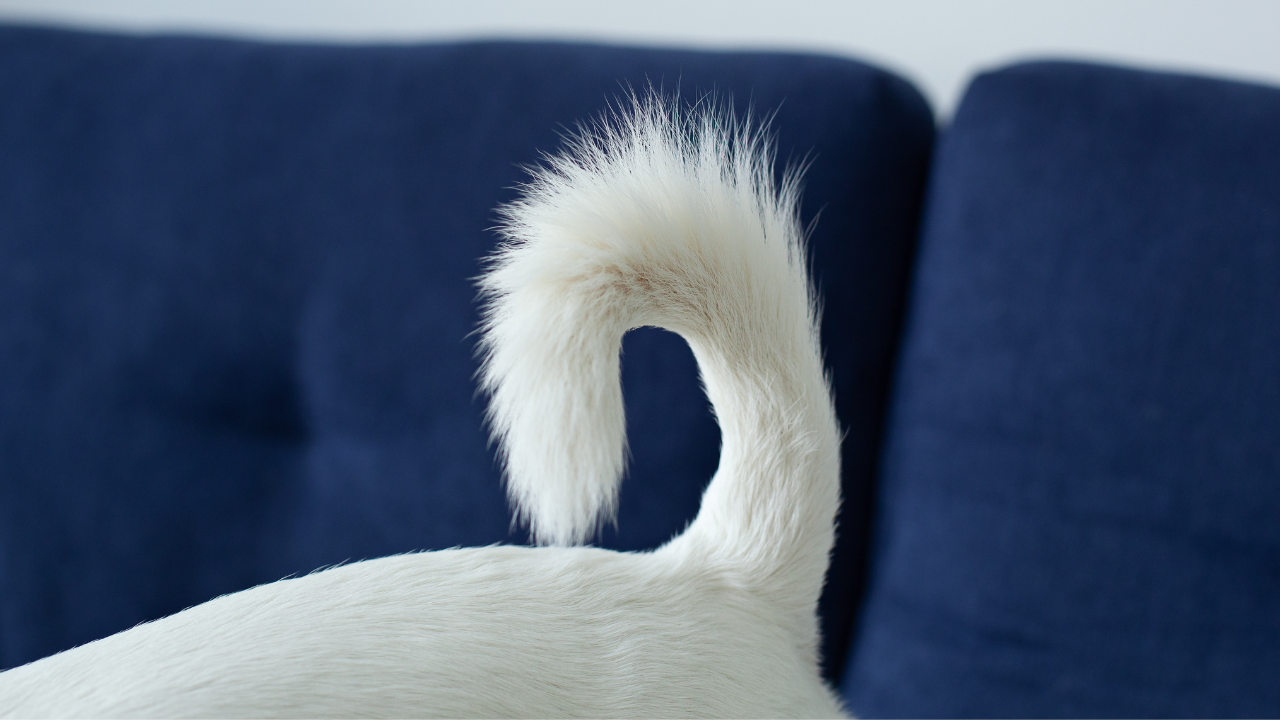
Watch a dog for more than five minutes and the tail becomes impossible to ignore. It wags, tucks, rises, stiffens, circles, and droops in a continuous stream of signals that most owners read intuitively without ever thinking about why the tail is there in the first place. The answer is more fascinating than most people expect, and understanding it changes how you see every wag, every tuck, and every slow, stiff raise your dog gives you throughout the day.
So why do dogs have tails? The short answer is evolution. The longer answer covers balance, communication, swimming, scent, and the remarkable journey from wild ancestor to family companion, all written into that flexible extension at the end of the spine.
The Evolutionary Origin of the Dog Tail
Dogs are descended from wolves, and the dog tail traces its origins directly to that ancestry. Wild canids relied on their tails for multiple survival functions across thousands of years, and those functions shaped the tail's anatomy, length, and flexibility long before dogs became domesticated.
The tail is an extension of the spine, made up of a series of small vertebrae called caudal vertebrae. Most dogs have between six and twenty-three of these vertebrae, which is why tail length varies so dramatically between breeds. A Greyhound's long, tapered tail and a Bulldog's short, screwed tail both trace back to the same ancestral structure, shaped over generations of selective breeding for specific traits and working roles.
What Are Dog Tails Actually For?
Balance and Physical Coordination
One of the tail's most practical functions is balance. Dogs use their tails as a counterweight during movement, particularly when navigating sharp turns at speed, walking along narrow surfaces, or changing direction quickly. The tail shifts in the opposite direction to the body's lean, helping the dog maintain its centre of gravity in the same way a tightrope walker uses their arms.
This function becomes most visible in working and sporting breeds. A Border Collie cutting sharply across a field, a Whippet banking around a corner at full speed, or a Labrador pivoting to retrieve on rough ground all use their tails actively as part of the physical mechanics of movement. Breeds bred for speed and agility tend to have longer, more flexible tails for exactly this reason.
Communication and Social Signaling
This is where the dog tail earns its most recognised role. Dogs use their tails to communicate constantly, both with other dogs and with the humans they live alongside. The position, speed, and direction of a wag all carry distinct meaning, and reading them accurately is one of the most useful skills any dog owner or professional groomer can develop.
A tail held high and wagging fast signals excitement or arousal. A tail held low or tucked between the legs signals fear, submission, or anxiety. A slow, stiff wag with the tail held high often signals alertness or mild threat rather than friendliness. A loose, sweeping wag with the whole hindquarters involved signals genuine relaxed happiness. A tail wagging more to the right is associated with positive emotional states, while research suggests leftward wags correspond to more negative ones.
Understanding these signals is directly relevant to grooming. A dog whose tail is tucked firmly on the grooming table is telling you something important about its comfort level. Groomers who read tail position and body language accurately make better decisions about pace, handling, and when to pause. This is part of why basic dog training matters before professional grooming extends well beyond obedience commands into the broader territory of canine communication.
Scent Distribution
Dogs have scent glands located on either side of the anal area, and the tail plays a direct role in how that scent is distributed. When a dog holds its tail up, it releases more scent into the surrounding air. When a dog tucks its tail, it reduces scent release. This is part of why a confident, dominant dog holds its tail high in social interactions while a nervous or submissive dog tucks its tail tightly.
Puppy dog tails are particularly expressive in this regard. Young puppies begin using their tails for social signalling from around the third to fourth week of life, which is when their social awareness starts to develop. Before that point, puppies do not wag at all, which tells us that tail movement in dogs is a learned social behaviour rather than a purely reflexive one.
Swimming and Water Work
Several breeds were developed specifically for water-based work, and their tails reflect that. The Labrador Retriever's thick, otter-like tail acts as a powerful rudder in water, helping the dog steer and maintain direction while swimming. The Irish Water Spaniel's distinctive rat tail and the Portuguese Water Dog's tail serve similar hydrodynamic functions.
For these breeds, the tail is not a peripheral feature. It is a working tool that makes water retrieval and navigation significantly more efficient. Removing or docking these tails, as was historically done in some working breeds, demonstrably affects swimming ability and directional control in water.
Puppy Dog Tails: How Tail Development Works
Puppies are born with their tails fully formed in terms of structure, but the behavioural use of the tail develops over the first few weeks of life. As mentioned earlier, intentional wagging does not begin until around three to four weeks, when puppies start engaging socially with their littermates and dam.
The tail also plays a role in the early grooming behaviour between a mother dog and her puppies. A dam reads her puppies' tail positions as part of assessing their comfort and wellbeing, responding to tucked or still tails as signals that something needs attention. By the time puppies reach the age where professional grooming becomes relevant, understanding at what age dogs can be groomed includes awareness of how tail communication has already developed and what it tells a groomer about a puppy's emotional state on the table.
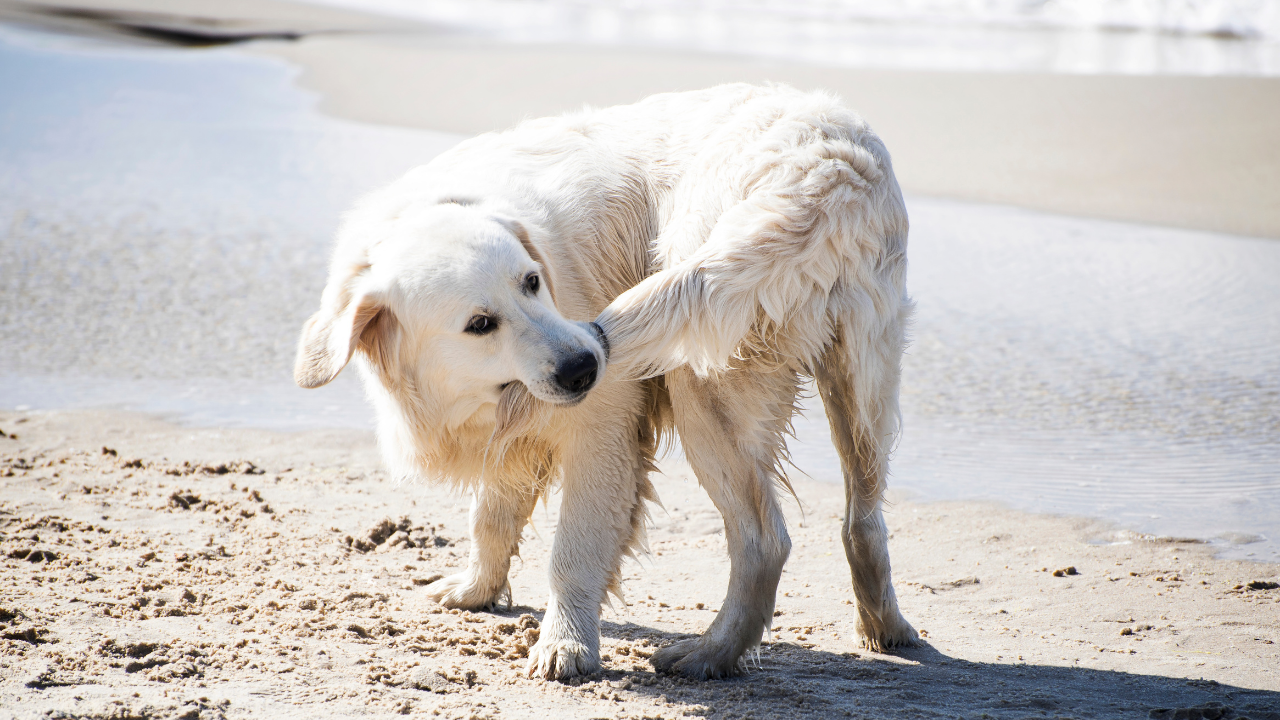
Not all dogs have long tails, and the reasons split into two distinct categories: natural genetics and human intervention.
Natural Bob Tails
Some breeds are born with naturally short tails due to a genetic mutation in the T-box transcription factor gene. Australian Shepherds, Pembroke Welsh Corgis, and Brittany Spaniels are among the breeds that occasionally produce naturally bobbed puppies. This mutation affects tail length without affecting the dog's overall health, though dogs carrying two copies of the gene face more serious developmental risks.
Docking
Tail docking is the surgical removal of part of the tail, historically performed on working breeds to prevent injury in dense brush or underground work. Terriers, Spaniels, and Pointers were among the breeds most commonly docked for working purposes. In many countries, docking is now banned or heavily restricted except in specific working contexts, reflecting a broader shift toward recognising the tail's communicative and functional importance.
A docked dog is not simply a dog with a shorter tail. It is a dog with a reduced capacity for the full range of tail-based communication, which has measurable effects on social interactions with other dogs. Research has shown that other dogs respond differently to docked dogs, sometimes misreading their signals or approaching with less confidence because the communication channel is reduced.
The Dog Tail and Grooming: Why It Matters
The tail region is one of the areas most commonly neglected in at-home grooming and one of the most important to include in a professional groom. In long-coated breeds, the tail base and underside are prime matting locations that owners regularly miss during brushing. In breeds like the Golden Retriever, Collie, and long-haired Dachshund, the tail feathering requires consistent maintenance between professional appointments to prevent the tangles from tightening into mats.
For breeds with heavily coated tails, the approach to tail grooming varies significantly. Grooming a long-haired Dachshund requires careful attention to the tail's silky feathering, which mats quickly if brushing is skipped during the weeks between professional visits.
Reading tail position during grooming also provides continuous information about how the dog is feeling throughout the session. A groomer who pays attention to tail signals alongside the overall body language of the dog makes better decisions at every stage of the appointment.
What the Dog Tail Tells Us About Canine Intelligence
The dog tail is not simply a physical structure. It represents one layer of a sophisticated communication system developed through thousands of years of living alongside humans. Research from the University of Padova demonstrated that dogs wag differently in response to different stimuli, and that other dogs read these directional differences and adjust their own stress responses accordingly. A leftward wag in another dog raised the heart rate and anxiety levels of watching dogs, while a rightward wag produced a calming effect. This level of nuance in a simple physical movement reflects the depth of social intelligence built into the canine body.
Professional groomers who understand canine communication bring a different quality of care to every appointment. The Professional Dog Grooming Academy incorporates canine behaviour and body language into its curriculum because reading a dog accurately is inseparable from grooming it well. Students on the Beginner grooming course and the level 3 Dog Grooming Course develop the observational skills that make every session safer, calmer, and more effective for the dog.
Final Thoughts
The dog tail is a remarkable piece of evolutionary engineering. It helps dogs balance, swim, communicate, and navigate the social world they share with other animals and with us. Every wag carries information. Every position tells a story. And every breed's tail reflects a distinct working history and a unique set of physical demands.
Understanding why dogs have tails makes you a more observant owner and a more informed handler. The next time your dog's tail rises slowly in a new environment, drops on the vet's table, or sweeps in wide circles when you walk through the door, you will know exactly what it means and why that signal has been millions of years in the making.
Why Do Some Dogs Have Short or No Tails?