Do You Need a License to Groom Dogs In 2026?

The pet industry continues to grow rapidly, and dog grooming has become one of the most in-demand pet care services in the United States. Many pet owners today expect groomers to be trained, trustworthy, and capable of handling dogs safely and professionally. If you’re considering working in the field or opening your own grooming studio, the first question that comes to mind is usually: Do you need a license to groom dogs? The answer isn’t always straightforward because licensing rules vary widely across states and municipalities.
Whether you’re exploring becoming a professional dog groomer or researching business requirements before launching a salon, understanding the legal and professional expectations is an important first step. This guide breaks down license requirements, regulations by state, online options, and the difference between certification and licensing so you can make informed decisions about your grooming future.
What is a Dog Grooming License?
A dog grooming license is a legal authorization that allows professionals to operate grooming services in a specific area. It may apply to the groomer, the grooming facility, or the business entity. Licensing helps ensure that grooming environments meet safety standards related to:
- Proper handling and restraint of pets
- Safe cleaning and sanitation practices
- Tools and equipment maintenance
- Animal welfare compliance
A license for dog grooming helps build trust, particularly when new clients visit a salon for the first time. It signals that the groomer takes responsibility for both business ethics and pet safety. Groomers who understand skin care, coat types, and approach dogs safely are more prepared to handle dogs of all sizes and temperaments.
Even in areas where licensing isn’t legally required, obtaining one supports strong professionalism and protects both the groomer and client legally.
Do You Need a License to Groom Dogs?
In the United States, the need for a dog groomer license varies. Most states do not require a personal groomer license, but nearly all require permits if you open a grooming business.
Here’s how regulations break down:
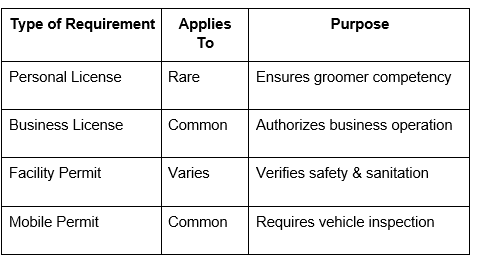
If you work inside a pet store or established grooming salon, the business owner usually handles licensing. However, you may still be required to show training or certification to meet hiring standards.
Gaining hands-on experience is essential. For example, knowing how long grooming takes for different breeds helps professionals schedule sessions properly and manage safety through the entire process.
Dog Grooming License vs. Certification
While often confused, licensing and certification are not the same. Understanding the difference helps you plan your career clearly:
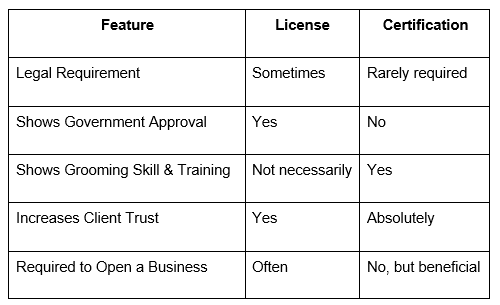
Certification is especially important if you plan to work for a veterinarian, high-end salon, or mobile grooming brand. Certifications demonstrate skill in:
- Coat trimming techniques
- Dog anatomy
- Behavior and breed knowledge
- Shampoo and product selection
- First aid and emergency response
Many groomers enhance their skills through an online dog grooming course, apprenticeship, or guided hands-on training. This combination builds professional confidence and prepares students for all types of grooming scenarios.
What States Require a Dog Grooming License in the USA?
As of now, there is no national licensing law for dog groomers in the United States, and most states do not require state-issued dog grooming licenses.
However, some states are currently proposing regulations due to rising concerns about pet safety. States where conversations or regulations are developing include:
- California
- New Jersey
- Massachusetts
While these states may not require a license for dog grooming yet, they do enforce sanitation, facility, and operational standards, especially for grooming businesses.
Where Licenses or Permits May Be Required
Even without a state-issued trade license for dog grooming, most independent groomers must follow city or county rules. Depending on where you operate, you may need:
- General Dog Grooming Business License
- Home grooming permit if working from a residence
- Mobile grooming vehicle permit
- Zoning approval to operate in commercial or residential zones
- Animal care permit for facilities with kennels or boarding
- Liability insurance
These requirements apply whether you operate a full-service salon, a self-employed booth, or a mobile workshop. Anyone planning to start a dog grooming business should confirm local rules before renting a workspace or purchasing equipment.
Additionally, inspections may occur to ensure that kennels, dryers, grooming tables, and bathing stations are well-maintained and safe for all pets.
Benefits of Being a Licensed Dog Groomer
Even in locations where licensing isn’t mandatory, becoming licensed or certified offers powerful advantages:
- Shows credibility and trustworthiness
- Helps pets stay safe in professional care
- Supports higher pricing for premium services
- Enables business insurance protection
- Expands career opportunities and partnerships
- Improves customer loyalty and referrals
Clients today prefer groomers who show professionalism, compassion, and training. Some customers will only choose groomers who demonstrate education based on their experiences with a certified dog trainer or veterinary professionals in the past. Licensing and certification help set your service apart as safe, ethical, and high-quality.
How to Get a Dog Grooming License & Certificate

If you live in an area where licensing or business registration is required, the process to obtain a dog groomer license typically follows a professional development pathway. Even in locations where licensing isn’t mandatory, the steps below help establish credibility, legal compliance, and high-quality care. Here’s a clear breakdown of how to get a dog grooming license in the United States:
Gain Education and Hands-on Experience
Before applying for licenses or opening a grooming space, it’s important to build foundational grooming skills. That includes coat trimming, bathing, nail care, breed-specific cuts, and animal-first handling techniques. Many groomers begin through mentorship or hands-on assistant roles at grooming salons, veterinary clinics, or pet shops.
Understanding how to read canine body language, maintain tools correctly, and manage hygiene protocols will prepare you for real-world grooming. Some students take a dog Groomer assistant course as a starting point to learn techniques and theory before gaining hands-on experience.
Get Certified
To become certified, you first need to complete grooming training from a recognized school or program. After training, you can apply for certification through approved grooming associations or testing bodies. The process usually includes a written exam and a hands-on skills test, where you demonstrate safe grooming techniques, breed trims, and proper equipment use. Once you pass, you receive official documentation or a certificate, proving you meet professional grooming standards and are qualified to groom dogs responsibly.
Apply for Business Licensing or Permits
Once you have the necessary education and certification, the next step is securing legal approval to operate. Requirements vary depending on location and whether you plan to groom from home, offer mobile grooming services, or run a full salon.
You may need to:
- Register a business name
- Apply for a general business license
- Complete zoning approvals
- Pass a facility or vehicle inspection
- Pay local or state fees
Checking with your city clerk, state licensing office, or Small Business Administration is the best way to confirm what applies to your situation.
Obtain Insurance
Before officially offering services, insurance is strongly recommended. Professional liability insurance protects you in case a dog is injured during grooming or reacts unexpectedly to a product or tool. Property or equipment insurance can also help if your tools, vehicle, or workspace are damaged or stolen.
Insurance provides peace of mind for both you and the pet owners who trust you with their dogs’ care.
Can You Get a Grooming License or Certification Online?

Absolutely! At PDGA Online, aspiring groomers can earn a recognized certification through our programs. We offer flexible online courses that allow you to learn at your own pace, complete with detailed video tutorials, practical demonstrations, and guidance from experienced instructors.
Students will develop practical grooming skills through hands-on assignments. These assignments range from completing case study questionnaires to recording grooming demonstrations. It is highly recommended that students pursue internships at grooming salons while completing the course, giving them the chance to practice techniques under expert supervision. This blended approach ensures that you gain both the knowledge and practical experience needed to confidently work with pets.
Upon successful completion of the accredited course(s), students will receive a PDGA certificate and can request ICOES certificates at an additional fee. ICOES is dedicated to providing accreditation services to online educators, enhancing their reputation, credibility, and trustworthiness. Through comprehensive guidelines and valuable feedback, ICOES ensures that all endorsed training content meets the highest educational standards. PDGA empowers you to grow your career, develop confidence, and take the next step toward becoming a skilled groomer.
Wrapping Up
So, do you need a license to groom dogs? It depends on where you live and how you plan to operate. Most U.S. states don’t require a personal dog groomer license, but many local governments do require business permits and compliance with health and animal safety regulations.
Whether working independently or at a grooming salon, training will determine your success. Skills such as breed-appropriate cuts, coat care, nail and ear health, and recognizing stress signals in dogs are all crucial to high-quality grooming services.
If you’re passionate about dogs and excited to help them look and feel their best, the grooming field can offer a rewarding long-term career. When you invest in proper training, licensing, and safety knowledge, you’re investing in a future filled with happy clients, both human and furry.