How Much Does a Dog Groomer Earn? A Complete Guide
Dog grooming has grown into one of the most in-demand careers in the pet industry. As more households bring dogs into their families, the need for skilled, professional groomers continues to rise. Whether you are considering grooming as a full-time career, thinking about launching your own salon, or simply curious about what the profession pays, this guide breaks down everything you need to know about dog groomer earnings, from starting salaries to what the highest earners make and what separates the two.
The Average Dog Groomer Salary
In the United States, the average annual salary for a dog groomer sits between $30,000 and $45,000, depending on location, experience, and employment setup. According to data from the Bureau of Labor Statistics and multiple industry surveys, the median hourly rate for groomers falls between $14 and $22 per hour.
Here is a general breakdown by experience level:
|
Experience Level |
Estimated Annual Earnings |
|
Entry-Level (0–2 years) |
$25,000 – $32,000 |
|
Mid-Level (3–5 years) |
$35,000 – $45,000 |
|
Experienced (5+ years) |
$48,000 – $65,000+ |
|
Salon Owner / Self-Employed |
$55,000 – $100,000+ |
These figures represent base earnings before tips, which can add a meaningful amount to take-home pay. Many full-time groomers report earning an extra $5,000 to $15,000 per year from client gratuities alone.
Factors That Affect How Much a Dog Groomer Earns
No two groomers earn exactly the same. Several key factors determine where a groomer's salary falls within the range.
1. Location
Geography plays one of the biggest roles in a groomer's earning potential. Urban areas, particularly cities like New York, Los Angeles, San Francisco, and Chicago, pay significantly more than rural regions. A groomer in Manhattan may charge $120 for a full groom that would cost $55 in a small Midwestern town. Higher living costs drive higher service pricing, which in turn increases groomer income.
In the UK, the average dog groomer earns between £18,000 and £28,000 per year, while groomers in Australia can expect AUD $45,000 to $65,000 annually, with self-employed groomers often exceeding that range.
2. Employment Type
How a groomer is employed makes a substantial difference:
- Salon employee: Receives a fixed hourly wage or a percentage of each groom (typically 40–50%). Benefits like health insurance may be included, but earning potential is capped.
- Mobile groomer: Works independently from a van, sets their own rates, and keeps all revenue minus operating costs. Mobile groomers typically charge 20–40% more per appointment due to convenience.
- Self-employed salon owner: Has the highest ceiling but also the highest overhead. A well-run independent salon can generate six-figure annual revenue, with the owner taking home a solid portion after expenses.
3. Qualifications and Certifications
Formal training and accredited certifications directly impact earning power. Groomers who complete a recognised professional qualification are seen as more credible and can justify higher service rates from day one. This is one of the most overlooked ways to accelerate income early in a grooming career.
The Professional Dog Grooming Online Training Academy offers internationally accredited courses that award students a professional certificate upon completion, giving graduates a clear competitive advantage when applying to salons or attracting private clients.
4. Specialisations
Groomers who develop niche skills consistently out-earn generalists. High-demand specialisations include:
- Breed-specific styling (Poodles, Schnauzers, Terriers)
- Hand-stripping for wire-coated breeds
- Show grooming to competition breed standards
- Grooming anxious or special-needs dogs
- Creative grooming (colour, patterns, themed cuts)
These skills command premium pricing. A specialist groomer who hand-strips a show terrier may charge three to five times more than a standard full groom.
5. Client Base and Reputation
Word-of-mouth reputation and a loyal returning client base are among the most reliable drivers of high income in grooming. Groomers who consistently deliver excellent results, treat dogs with care, and communicate well with owners naturally build a full appointment book — and that waiting list translates directly into earnings.
Dog Groomer Earnings by Employment Setting
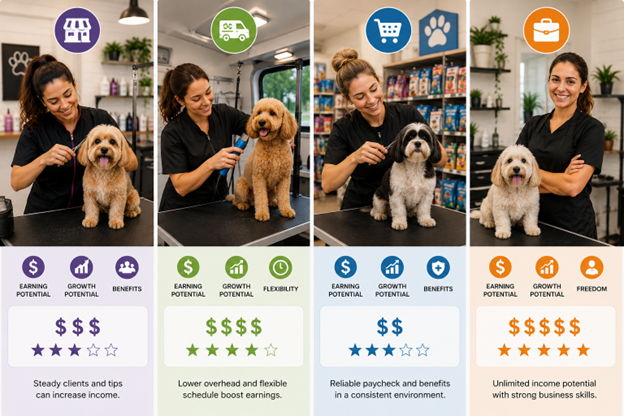
Working in a Pet Salon or Spa
Employed groomers at private salons earn on a commission or hourly basis. Commission structures typically give the groomer 40–50% of the service price, which means a $60 groom brings the groomer $24–$30. On a busy day with six to eight appointments, earnings add up quickly.
Working at a Chain Store
Chains like PetSmart and Petco offer stable employment with predictable hours. Hourly wages at chains typically start around $13–$16 and can rise to $20+ with seniority. The trade-off is less creative freedom and a higher daily dog volume that can lead to physical fatigue over time.
Mobile Dog Grooming
Mobile groomers operate their own vans equipped with grooming tables, tubs, and dryers. They handle all aspects of the business including scheduling, client management, and equipment maintenance in exchange for keeping 100% of their service fees. Mobile grooming businesses in suburban and urban areas often earn $60,000 to $90,000 per year once fully booked, with some operators exceeding that significantly.
Running Your Own Grooming Salon
Salon ownership has the highest income ceiling. Once a business is established, a salon owner earns not just from their own grooming but from the work of every groomer they employ. Revenue potential depends on location, staff size, and business management skills. Understanding how to start a dog grooming business from a strong foundation makes a meaningful difference in how quickly a salon becomes profitable.
How Qualifications Boost a Groomer's Income
One of the clearest ways to move into the higher salary brackets faster is through formal education. Groomers who have completed accredited training programs are able to:
- Charge higher per-groom rates from the outset
- Handle a wider range of breeds and coat types confidently
- Attract salon employers willing to offer better pay
- Build client trust quickly, reducing the time needed to fill an appointment book
PDGA's dog grooming courses cover breed-specific techniques, coat science, canine behaviour, and salon management through video-based lessons reviewed by certified grooming professionals. All flagship courses are accredited by ICOES, meaning graduates hold a credential recognised by employers internationally.
For groomers who want to build specialist knowledge without committing to a full certification, the mini-courses cover focused topics like canine anatomy, coat types, and health fundamentals skills that directly support better service quality and client retention.
Tips: The Hidden Boost to Groomer Income
Tips are a significant and often underestimated component of groomer income. Most pet owners in the US tip between 15 and 25% of the grooming bill as standard practice, with higher amounts for exceptional work, difficult dogs, or during the holiday season. A groomer handling eight appointments per day at an average bill of $65, with clients tipping 20%, adds an extra $104 in tips to that single day over $27,000 per year if maintained consistently.
Understanding how much dog owners typically tip and the factors that influence tip amounts gives groomers a clearer picture of their actual total compensation.
What the Highest-Earning Groomers Have in Common
The groomers at the top of the pay scale share a consistent set of traits:
- Formal qualifications from accredited programs
- Breed-specific expertise in at least one or two specialty areas
- Strong business sense — they track bookings, price services correctly, and manage time efficiently
- An established reputation built through consistent quality and client communication
- Multiple income streams — grooming services combined with retail product sales, training referrals, or online education
These are not factors reserved for people who have been in the industry for decades. A motivated new groomer with the right training and business mindset can reach the upper-middle income range within two to three years.
Is Dog Grooming a Financially Rewarding Career?

For someone passionate about animals and skilled with their hands, dog grooming offers a sustainable and genuinely rewarding income. The career provides flexibility, particularly for self-employed groomers, along with daily variety, physical engagement, and the satisfaction of working directly with animals.
Earnings are not fixed at entry level. Unlike many professions, grooming income is directly tied to skill, reputation, and effort. Groomers who invest in proper training, develop a niche, and treat their clients, both the dogs and their owners, with care and professionalism tend to see their income grow year after year.
The demand for qualified, trustworthy groomers is not declining. As long as families own dogs, there will always be a market for skilled people who know how to care for them properly.
Final Thoughts
A dog groomer's earnings range from entry-level wages to a comfortable six-figure income for experienced professionals and salon owners. Location, qualifications, employment type, and specialist skills are the primary variables. The most direct path to the higher end of the range is investing in proper training early and building a reputation through consistent, high-quality work.
If you are serious about pursuing grooming as a profession, the foundation you build in the first few years, the courses you complete, the techniques you master, the client relationships you develop will determine where your earnings land five years from now.